

As a kindergarten teacher I’m always trying to find ways to make learning a joyful activity. Not only because the kids in kindergarten are small, but also because as a teacher in IB school I am committed to guide the children discovering how can they became life long learners, and that in my opinion, can only happen if the children can connect and enjoy learning.
When I was planning this Unit of Inquiry, I was struggling how to connect the unit with patterns an how to introduce the patterns to the students in a way the y can enjoy. And then, the answer came to me: Music.
“Music, specially rhythm , is one of the best ways to get these early years students familiar with the sense of pattern, (not the concept because it is very abstract for their still young brains). Whenever they follow any loop rhythm, they are also mentally internalizing the repeating patterns; Whenever they follow any increasing tempo rhythm, they are also internalizing the increaing patterns.”
Mr. Maldonado, Grades 1 and 2 Homeroom Teacher at CISS and musician.
Patterns are important in our lives that is why we can read in the New Brunswick curriculum, what patterns brings to kindergarten kids:
- Working with patterns enables students to make connections within and beyond
mathematics.
- Patterns allow students to make predictions, and justify their reasoning when solving problems.
- Learning to work with patterns in the early grades helps develop students’ algebraic thinking that is foundational for working with more abstract mathematics in higher grades.
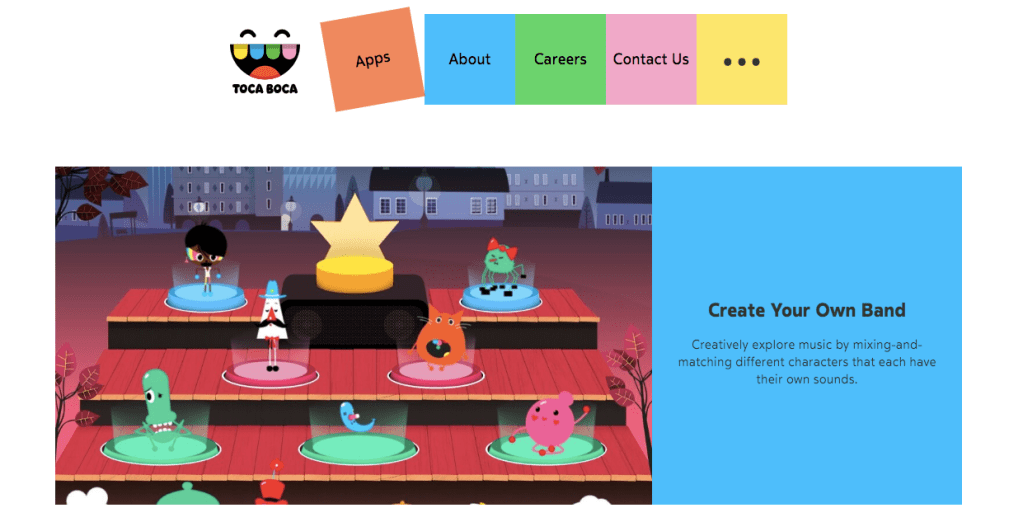
Now that we have introduced the topic, I would like to invite you to explore the patterns playing with your children to “create music”. So grab a pan, a spoon or whatever you have and ride a party. Your children will love it! Maybe you still have doubts … ok, I’ll give you another alternative. I am going to share some very interesting apps that will help us with our goal: understand the patterns a little better in a fun way.
“Music is children’s first patterning experience and helps engage them in mathematics even when they don’t recognize the activities as mathematics. It is highly social, natural, and developmentally appropriate way to engage even the youngest child in math learning. Beat, rhythm, melody, and tempo possess inherent mathematical principles such as spatial properties, sequencing, counting, patterning. It becoming clear stimulate by music frequently helps to adjust to math”
Ms. Kim, music teacher at Canadian International School of Shenyang
I am looking forward to watching your party patterns videos!!!!
 CISS Kindergarten